Issue #14: Dominican Spirituality

The Dominican Order (also called the Order of Preachers), founded by Saint Dominic, remains one of the most influential religious orders in the Roman Catholic Church. Dominican spirituality is rooted in education, evangelization, intellectual formation, and preaching. If you have ever wondered where the Rosary came from, pious belief holds that the Virgin Mary gave it to Dominic as a spiritual weapon against heresy and sin. It continues to be a beloved devotion in the Roman Catholic Church. Dominic’s approach to evangelization and spirituality combined a life of poverty and simplicity with mission, witness, dialogue, and engagement with the everyday person. The intellectual tradition of the Dominican Order lives on in Saint Thomas Aquinas, who is arguably the order’s most influential theologian, whose Summa Theologiae remains foundational to Catholic theology and philosophy.
Early Life and Formation of Saint Dominic
Dominic lived at the time of Saint Francis of Assisi. His full name was Dominic de Guzmán (1170–1221) and was later canonized as Saint Dominic. He was born at Caleruega, Spain, to the noble family of Old Castille. Dominic was supported by his priest uncle and studied at a famous school in Palencia.[1] Pope Benedict XVI gives an account of his early years: Dominic “distinguished himself straight away for his interest in the study of Sacred Scripture and for his love of the poor, to the point of selling books, which in his time were a very valuable asset, in order to support famine victims with the proceeds.”[2] Dominic became a Castilian Catholic priest and later a canon at the cathedral in Osma under Bishop Diego in 1196. The cathedral canons were reformed and adopted the Augustinian Rule.[3]
The saint made significant contributions to the renewal of the Church, as did his contemporary Saint Francis, and was the founder of the Order of Preachers (or Dominican Friars).[4] Lawrence posits that Francis and Dominic met in Rome in the house of Cardinal Ugolino and shared mutual respect.[5] Saint Dominic developed a profound appreciation for poverty after meeting Saint Francis. As Peters explains, the Dominican understanding of “poverty was never an absolute but was always a means to an end, a ‘weapon’ to be used to make their message acceptable and credible to heretics.”[6] It’s likely, therefore, that the Franciscans influenced the Order of Preachers on their policy of corporate ownership.[7] Like the Franciscans, the Dominicans were birthed in a context where there was widespread heresy, notably the dualistic Albigensian (also called Cathar) heresy.[8]
Dominic’s Mission Against Heresy
According to Peters, in 1203, Dominic traveled with Bishop Diego to Denmark to negotiate a royal marriage. He recounts that, “on their way through Toulouse, they stayed at the inn of a Cathar deacon. While discussing the Cathars’ reasons for leaving the church, Dominic was able to bring him back to orthodox faith, an encounter that had a profound impact on Dominic.”[9] Peters explains that they had to make a second trip to Denmark, and Dominic noticed the need for missionaries in the region. On his way home, he visited the Cistercians at Cîteaux and the Cistercian missionaries in Montpellier who were contending against the Albigensians. The Cistercians asked Dominic and his Bishop how they might proceed in winning the Albigensians back to the orthodox Christian faith. In response, Dominic proclaimed that “the message is only as believable as the messenger.” Material wealth, possessions, and fine clothes were offensive to the Albigensians, who were antimaterialistic heretics, and so Dominic recommended that they go about barefoot and in humility. They were impressed by the advice, and so the Cistercians invited Dominic and Diego to join them in their mission endeavors, which they did.[10]
The Foundation of the Dominican Order
Saint Dominic converted a man called Peter, who joined him and gave up his house to the preachers who were attracted to Dominic’s aspiration. This was a significant event in the history of the Dominican movement, where the Order of Preachers was eventually born.[11] Bishop Fulk of Toulouse was impressed with the success of Dominic and his men and asked that he lead a company of preachers in his diocese. Dominic agreed and sent the men to the cathedral school to study theology. This led to Dominic petitioning Rome to grant permission for the growing company of itinerant preachers. Permission was granted, but with the proviso that these preachers act as clerics who are supported by tithes; in other words, they were not to beg.[12] Lawrence explains that “Papal confirmation obtained from Pope Honorius III in 1216 did no more than recognise the existence of the fraternity and confirm its possessions at Toulouse. It did not ratify any specific rule comparable to that of the Friars Minor.”[13]
In obedience, Dominic submitted to the directives of Popes Innocent III and Honorius III and employed the Augustinian Rule. He adapted it to the apostolic life of his mendicant order as he and his companions travelled around from place to place preaching. When they returned home, they dedicated their lives to study, prayer, and community life.[14]
Saint Dominic carried out his mission in poverty and austerity as he preached and held discussions in public.[15] The religious order that he founded was one for the theologian and teacher, which reminds us that theology and spirituality go hand-in-hand, enriching one’s soul and life, says Pope Benedict XVI.[16] He proclaims that “the consecrated religious, and also all the faithful, may find profound ‘inner joy’ in contemplating the beauty of the truth that comes from God. A truth that is ever timely and ever alive.”[17] It was important to Dominic that his followers gained a solid theological training. He, therefore, sent them to the universities of his day. The constitutions of the Dominican order have since given significant importance to studying in preparation for the apostolate.[18]
The members of the Order of Preachers are known as friars, belonging to the mendicant tradition, rather than monks. Dominican Friars live by embracing poverty and receiving alms and serve by preaching and teaching, rather than being enclosed (or cloistered) as monks are in monasteries. According to Peters, many of these friars worked in the universities and produced some of the greatest medieval Christian thinkers, the most famous of which is Saint Thomas Aquinas.[19]
Thomas Aquinas: The Dominican Scholar
The Dominican, Thomas Aquinas (1225–1274), was a towering figure and continues to hold significant influence in theology and philosophy in both Roman Catholic and Protestant worlds. Peters says that Thomas was born to an aristocratic family and sent to Monte Cassino, a Benedictine monastery, when he was about five years of age. But due to political unrest in the area, he left the monastery for study at the University of Naples. Here, Thomas came in contact with the Dominicans, whose preaching and dedication to study inspired him. In 1242, Thomas joined the Dominican Order, contrary to his parents’ wishes. Over about two years, they tried to force him to return to Monte Cassino, but they were in the end unsuccessful. Instead, he travelled to Paris to study under the Dominican, Albert the Great. Not long after, he joined Albert and left for Cologne to study further. It was at Cologne that his teacher and fellow students realised that he was something of an intellectual prodigy. He returned to Paris to begin the process of becoming a master in theology. He stayed at the University of Paris, where he taught for many years. Later, he taught in Rome and ministered in his province of Orvieto as a lector. Thomas wrote several significant works in philosophy, theology, and biblical studies. He looked for truth rooted in faith, blending reason and revelation to explain the mysteries of God. However, none is more influential than his magnum opus, Summa Theologiae, meaning “Summary of Theology.”[20] The Summa was written to train Dominicans in their preaching and teaching ministry.[21]
Thomas Aquinas isn’t considered a Christian mystic; however, he was deeply spiritual and humble. Nearing the end of writing his Summa, he had a profound religious (or mystical) experience where he encountered God. After this, he laid down his quill and declared, “All my writings seem like straw compared to what I have seen.”
Dominic’s Enduring Legacy
Peters proclaims, “The history of the Dominican order demonstrates that it was founded for one primary purpose: preaching (whether to bring heretics back into the church or to edify the laity). It was a true Order of Preachers.”[22] Other than Saint Dominic himself, no one embodied this better than Saint Thomas Aquinas!
Task
Read the Rule of Saint Augustine and the Primitive Constitutions of the Order of Preachers (Dominican Constitutions) available here and here. The Rule teaches that nothing should be called one’s own, but everything should be shared in common, while the Constitutions of the Order of Preachers highlight study, preaching, and the salvation of souls as central to their life.
Write a short essay (300–400 words) and reflect on how the balance between sharing life together and serving others through mission might encourage Christians today. How can believers live out both community and mission in their own context?
AI Disclaimer:
This blog has been edited for grammar, clarity, and readability using AI-assisted tools. The core content, theological insights, and personal reflections remain my original work.
[1] C. H. Lawrence, Medieval Monasticism: Forms of Religious Life in Western Europe in the Middle Ages, 4th ed., Medieval World Series (New York: Routledge, 2015), 233.
[2] Pope Benedict XVI, Great Christian Thinkers: From the Early Church Through the Middle Ages (Minneapolis: Fortress Press, 2011), 249.
[3] Lawrence, Medieval Monasticism: Forms of Religious Life in Western Europe in the Middle Ages, 233; Greg Peters, The Story of Monasticism: Retrieving an Ancient Tradition for Contemporary Spirituality (Grand Rapids: Baker Academic, 2015), 173.
[4] Peters, The Story of Monasticism: Retrieving an Ancient Tradition for Contemporary Spirituality, 173; Pope Benedict XVI, Great Christian Thinkers, 249.
[5] Lawrence, Medieval Monasticism: Forms of Religious Life in Western Europe in the Middle Ages, 234.
[6] Peters, The Story of Monasticism: Retrieving an Ancient Tradition for Contemporary Spirituality, 175.
[7] Lawrence, Medieval Monasticism: Forms of Religious Life in Western Europe in the Middle Ages, 234.
[8] Peters, The Story of Monasticism: Retrieving an Ancient Tradition for Contemporary Spirituality, 173.
[9] Peters, The Story of Monasticism: Retrieving an Ancient Tradition for Contemporary Spirituality, 173.
[10] Peters, The Story of Monasticism: Retrieving an Ancient Tradition for Contemporary Spirituality, 174.
[11] Peters, The Story of Monasticism: Retrieving an Ancient Tradition for Contemporary Spirituality, 174; Pope Benedict XVI, Great Christian Thinkers, 250.
[12] Peters, The Story of Monasticism: Retrieving an Ancient Tradition for Contemporary Spirituality, 174.
[13] Lawrence, Medieval Monasticism: Forms of Religious Life in Western Europe in the Middle Ages, 234.
[14] Pope Benedict XVI, Great Christian Thinkers, 250.
[15] Pope Benedict XVI, Great Christian Thinkers, 250.
[16] Pope Benedict XVI, Great Christian Thinkers, 251.
[17] Pope Benedict XVI, Great Christian Thinkers, 251.
[18] Pope Benedict XVI, Great Christian Thinkers, 251.
[19] Peters, The Story of Monasticism: Retrieving an Ancient Tradition for Contemporary Spirituality, 176.
[20] You can read the Summa Theologiae and do a free course here: https://aquinas101.thomisticinstitute.org/
[21] Peters, The Story of Monasticism: Retrieving an Ancient Tradition for Contemporary Spirituality, 177.
[22] Peters, The Story of Monasticism: Retrieving an Ancient Tradition for Contemporary Spirituality, 179.

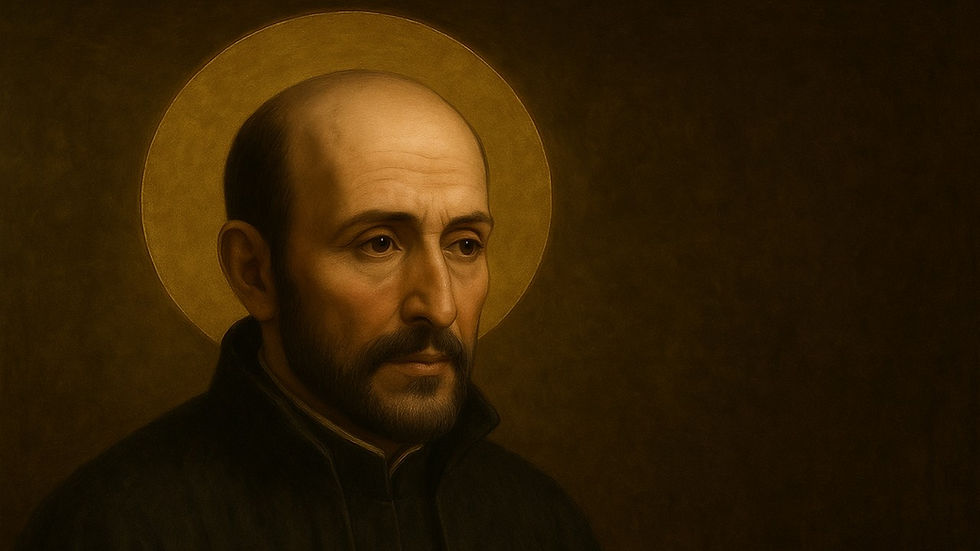

This reflective spiritual and theological feature from Robert Falconer (Dominican Spirituality) highlights the vital intersection of contemplative tradition, historical monastic orders, and modern faith exploration—themes that find great synergy with religious studies guides, spiritual philosophy spotlights, and cultural heritage chronicles, published on https://34.ua. The piece explores the core pillars of the Dominican Order (Order of Preachers), founded by St. Dominic in the 13th century, focusing on its unique synthesis of contemplation, academic study, communal life, and active preaching.