


Issue #12: Bernard of Clairvaux and Cistercian Spirituality

Picture a monk, abbot, theologian, mystic, reformer, political advisor, champion of the Knights Templar, and promoter of the Second Crusade—all in one extraordinary figure. Meet Bernard of Clairvaux, a twelfth-century visionary who shaped the Middle Ages.[1] Some have suggested that he was “the last of the Church Fathers.”[2] The great scholar of Christian mysticism, McGinn, explains that “This twelfth-century mystic, a many-talented man, was a figure larger than life, both to his contemporaries and to later generations. Although he won his greatest fame as a contemplative, the abbot of Clairvaux was also a man of action, deeply involved with a wide range of issues of his time. He engaged in more than a few acrimonious (meaning bitter) controversies. Despite these quarrels, Bernard does not appear a harsh and unlovable figure.”[3]
The Roots of Cistercian Reform
In 1098, one of the founders of the Cistercian Order, Robert Molesme, established the abbey at Cîteaux, France. There was perceived spiritual and moral decline in the Benedictine Order, like many other religious orders of the day, and so reforms were necessary.
Such reforms included the Cluniac Reforms, which were a reform movement within the Benedictine tradition centred around the Abbey of Cluny, founded in 910 in Burgundy, France. It emphasised an elaborate liturgy, developed a network of monasteries with a centralised authority under the Abbot of Cluny, and promoted moral renewal, communal life, and intercessory prayer.[4] Another significant monastic reform was the Carthusian Reform, which was known for its strict and rigorous monastic life. This religious order was founded by Bruno of Cologne in 1084. The Carthusian Order began in the Chartreuse Mountains, France. It emphasised deep contemplative prayer, and extreme silence and solitude. The Order offered the Carthusians a unique blend of hermit-like (eremitical) and community (cenobitic) life, where they would spend most of their time in their own cells but enjoyed limited communal activities like celebrating the Mass and certain prayers.[5]
This blog, however, focuses on the Cistercian reform started by Robert Molesme, who set out to reform Benedictine monasticism into a stricter observance of the Rule of Saint Benedict.[6] As often happens in monasteries, they eventually become corrupt, and then they need to be reformed. There is an ongoing pattern of corruption–reform–corruption–reform, and so on. Robert returned to his initial monastery a year later.[7]
McGinn points out that greater poverty and stricter asceticism, along with a separation from involvement in the world’s affairs, which were an important part of Cistercian practice, were no doubt also laid down in Saint Benedict’s Rule. He argues that the Cistercians were serious innovators as well, introducing additional practices that were not in the Rule, and were perhaps beyond what Benedict might have imagined because he wrote primarily for a single monastery or group of monasteries. The Cistercians were more widespread, and so they pioneered a new form of monasticism for many monasteries.[8]
Bernard of Clairvaux: Monk, Leader, and Reformer
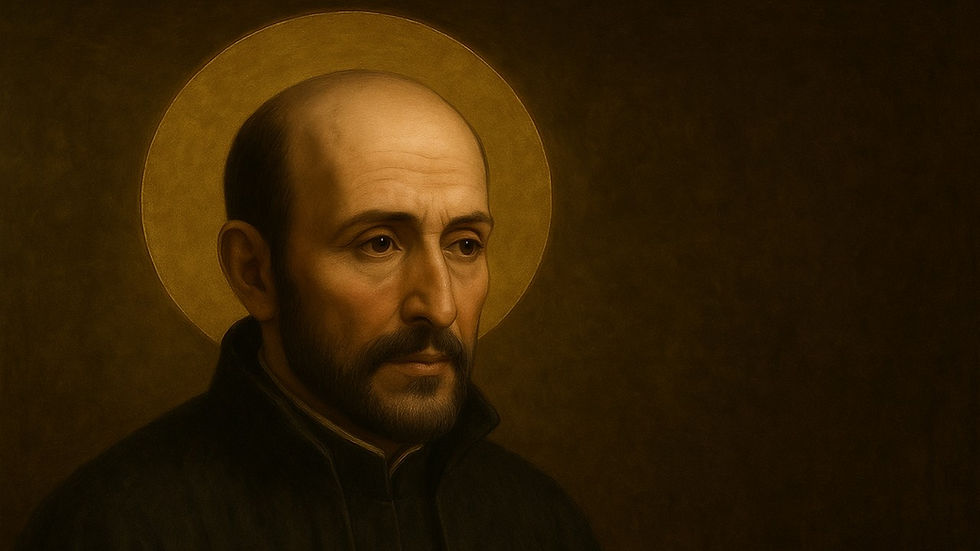
Bernard of Clairvaux was born in Fontaines-les-Dijon in the Duchy of Burgundy, now eastern France, to a noble family in 1090. In his youth, he studied rhetoric and Latin grammar. His formation prepared him for the life of a monk.[9] He entered the Cistercian monastery of Cîteaux in 1112. Bernard was likely influenced by Robert’s vision of a more austere and simple monastic life, which became foundational to the Cistercian reform.[10] The Cistercians were known for their undyed white habits, which were different from the traditional Benedictine grey or black habits. Burrows explains that they “sought to follow Benedict’s Rule rigorously by committing themselves to manual labor, prizing simplicity of life, and shaping their common life through a strict regimen of prayer and silence.”[11]
According to McGinn, Alberic of Cîteaux served as abbot after Robert Molesme from 1099 to 1109, after which Stephen Harding became the third abbot of Cîteaux. It was in 1112 that Bernard of Clairvaux joined the monastery. Imagine persuading all your single male family members and friends that they should become monks. That’s what Bernard did, and so he shows up at the monastery with thirty such companions, and they all join the struggling monastery. It was struggling because it practiced a rigorous ascetic lifestyle, which meant fewer members joined the community.
With fresh energy, the monastery enjoyed revitalisation and recruits. Three years after joining the monastery, in 1115, Stephen appointed Bernard, who was now only 25 years of age, to become abbot and lead a group of monks and establish a new monastery at Clairvaux, a position he held until he died in 1153. Together, Stephen and Bernard would collaborate and shape the Cistercian Order and establish the principles of the order. Seeing spiritual and leadership qualities and potential in Bernard, Stephen entrusted him with significant responsibility.[12] Pope Benedict XVI explains that the young abbot “was able to define his conception of monastic life and set about putting it into practice. In looking at the discipline of other monasteries, Bernard firmly recalled the need for a sober and measured life, at table as in clothing and monastic buildings, and recommended the support and care of the poor.”[13]
Bernard has sometimes been called the “difficult saint,” says Brian McGuire, a historian of medieval monasticism, especially when “he can seem abrasive, overconfident, almost arrogant.”[14] And if you were like me, you would probably also struggle to reconcile his involvement with the crusades with his deep spirituality. Initially, Bernard criticised one of his fellow abbots who took some of his monks to the Holy Land; however, he would later establish the Order of the Knights Templar, who were fighting monks, and gave them a Rule. He also promoted the Second Crusade, which later turned into a disaster, and many lost their lives.[15]
The historian of religion, John Dickson, in his book, Bullies and Saints: An Honest Look at the Good and Evil of Christian History, offers a fair and balanced discussion on the Crusades. In it, he acknowledges the brutal and violent nature of these so-called “holy wars” where many people were needlessly killed, along with countless moral failures of the Church of the time. Dickson explains how the Crusades were, without a doubt, a departure from Jesus’s ethics and the non-violent ethic of the early Christian teaching, which would have never endorsed the Crusades and their violence. This was in direct contrast to love, humility, and charity taught by Jesus Christ.[16]
However, without excusing the Crusades, says Dickson, it ought to be contextualised in the medieval world, and its complex political and religious motivations need to be acknowledged as well. The Crusades were not only about religious fanaticism, but geopolitical factors were also at play, especially when the Crusades looked to defend Christian territories against Islamic expansion. The “fighting monks” also provided safety and protection for those who were on pilgrimage to the Holy Land. During the Crusades, despite much evil, there was also a lot of good, like significant acts of charity, for example, building hospitals and monasteries. While the Crusades should never have happened—they were a moral and theological failure—there were nevertheless positive outcomes, hence “Bullies and Saints.” But let’s not overemphasize the positives![17]
Contemplative Spirituality and Mystical Theology
Despite Bernard’s regret over the outcome of the Second Crusade and its lack of spiritual purity, his promotion of it seems like a contradiction when he and the religious Order of the Cistercians were deeply mystical and focused on contemplation and prayer. As we have seen, Bernard was an active and powerful force in the world and had a profound influence on the people and society of the day. For the Cistercians, this balance of contemplation, mysticism, and action was interconnected; they were complementary. They, therefore, resembled the dialectic between Mary and Martha (Luke 10:38–42).[18] In their active service, they also became pioneers in clearing forests, draining swamps, building monasteries, and so on.[19]
Bernard of Clairvaux was an ambitious visionary, but he was also a very different kind of visionary, that is, he had visionary experiences where he often encountered Christ Jesus and the Virgin Mary. In one of his visions, he saw Jesus on the cross. He dismounted from the cross and embraced Bernard. However, some of the visions attributed to him are likely legends.[20] Pope Benedict XVI explains that for Bernard, “True knowledge of God consisted in a personal, profound experience of Jesus Christ and of his love. And this is true for every Christian: faith is first and foremost a personal, intimate encounter with Jesus; it is having an experience of his closeness, his friendship, and his love. It is in this way that we learn to know him ever better, to love him and to follow him more and more.”[21]
Bernard took a different stance from Scholastic theology articulated by Anselm of Canterbury (1033–1109), “Faith seeking understanding,” which was the original title of his Proslogion. Instead, Bernard promoted the notion, “The soul seeking the Word (Christ).”[22] Although he was critical of excessive rationalism, he did not reject the use of reason either.
Burrows writes that themes of romance, love, beauty, and joy became central themes in human experience in both the secular world during Bernard's time, as well as in the writings of monastic theologians.[23] This is also true of Bernard’s writing. He wrote several important works, and many of them were mystical in nature. The first was his mystical commentary on the Song of Songs (Sermons on the Song of Songs), written in 1135. This “mystical masterpiece,” as McGinn calls it, included eighty-six sermons that were “polished literary works, a highly developed rhetorical treatment of the mystical life on the basis of a spiritual exegesis of the most profound (for Bernard) book of the Old Testament, Solomon’s song of love.”[24] These sermons, McGinn explains, “express an integration between the mystical meaning of the Song as telling of the love between Christ and the individual Christian (Bride-Soul) and the ecclesial mystery of Christ and the Church (Bride-Church).”[25]
Carlos Eire, a Professor of History and Religious Studies at Yale University, explains that this is considered the favourite text for Christian mystics, especially for those sometimes called “Love Mystics.” Bernard himself could be classified as a Love (or Affective) Mystic, which simply means that he centred his prayer on the love of God and developed humility as a chief virtue. No doubt this appears somewhat ironic when Bernard was a powerful force in the Church, as well as its community and public life. Yet, his humility set him apart, and he was very much aware of the temptations that significant power brought with it, and that such power can corrupt.[26]
Loving God: The Journey of the Soul
The second text is titled On Loving God; it’s his most beloved work and was written for fellow monastics.[27] And in recent generations, as Burrows tells us, it “has consistently found an appreciative reception among Protestant and Roman Catholic readers.”[28] On Loving God highlights four levels of loving God in one’s spiritual quest.
Love of Self for the Sake of Self. This selfish love is where all human beings begin—it’s our natural state. Here, our love is inward-looking, focusing on our own interests, desires, personal gain, and even survival. It’s ultimately individualistic and hedonistic, characteristic of our fallen human condition.
Love of God for the Sake of Self. The next level up is still motivated by self-interest, but here people turn to God, seeking his protection, provision, blessing, and help. Bernard points out that most Christians find themselves at this level, where they have a transactional relationship with God, focused on what God can do for them.
Love of God for the Sake of God. Eire suggests that one may transcend the second level to the third level through prayer. Most of us, he says, are in the second level. However, in the third level, God carries the individual up to himself. The third level is transformational and is usually associated with mystical experiences. Here, believers begin to love God for who he is, rather than for what he can do for us. This level is characterised by an experience of deep connection with God, enjoying his love and his divine presence through spiritual disciplines like prayer and contemplation. In the Christian mystical tradition, this is often referred to as “illumination,” where one develops a profound personal relationship with God, with a deep sense of awe and affection.
Love of Self for the Sake of God. The last level makes its way back to the love of self, and yet this is the highest and rarest level, where one achieves complete alignment of one's will with God’s will. This is ultimately achieved in union with Christ, deification, or theosis. Think of your will as a drop of water merging with a barrel of wine (God’s will). Here, human affections are transformed in such a manner that they reflect God’s will. In this level, one begins to love oneself as God loves them—not for one's own sake or for selfish reasons, but for the sake of God and as an expression of his divine love. This is rarely achieved in this life, and if it is, it’s usually brief; however, it will ultimately be fully realised in the afterlife.[29]
Although many monks today struggle to identify with Bernard of Clairvaux’s thoughts and actions with their own spirituality, his legacy, nevertheless, lives on in the two Cistercian Orders, the Trappists, that is, the Order of Cistercians of the Strict Observance (O.C.S.O.) and the Regular Cistercians (O.Cist.).[30]
Task
Read Bernard of Clairvaux’s On Loving God, available freely here. Reflect on which of the four levels of loving God you think you are on, and how you might progress to the next stage of loving God in your spiritual journey.
AI Disclaimer:
This blog has been edited for grammar, clarity, and readability using AI-assisted tools. The core content, theological insights, and personal reflections remain my original work.
[1] Bernard McGinn, The Great Cistercian Mystics: A History (New York: The Crossroad Publishing Company, 2019), 5.
[2] Pope Benedict XVI, Great Christian Thinkers: From the Early Church Through the Middle Ages (Minneapolis: Fortress Press, 2011), 214.
[3] McGinn, The Great Cistercian Mystics, 22.
[4] C. H. Lawrence, Medieval Monasticism: Forms of Religious Life in Western Europe in the Middle Ages, 4th ed., Medieval World Series (New York: Routledge, 2015), 76–93; Greg Peters, The Story of Monasticism: Retrieving an Ancient Tradition for Contemporary Spirituality (Grand Rapids: Baker Academic, 2015), 123–24.
[5] Lawrence, Medieval Monasticism: Forms of Religious Life in Western Europe in the Middle Ages, 145–48; Peters, The Story of Monasticism: Retrieving an Ancient Tradition for Contemporary Spirituality, 143–46.
[6] McGinn, The Great Cistercian Mystics, 3–4.
[7] St. Bernard of Clairvaux: The Soul Seeking the Word, 2023.
[8] McGinn, The Great Cistercian Mystics, 8.
[9] Mark S. Burrows, “Bernard of Clairvaux (1090–1153): On Loving God,” in Christian Spirituality: The Classics, ed. Arthur Holder (New York: Routledge, 2009), Ch. 8.
[10] McGinn, The Great Cistercian Mystics, 3–4.
[11] Burrows, “Bernard of Clairvaux,” Ch. 8.
[12] McGinn, The Great Cistercian Mystics, 3–5.
[13] Pope Benedict XVI, Great Christian Thinkers, 214.
[14] Brian Patrick McGuire, Bernard of Clairvaux: An Inner Life (Cornell University Press, 2020), Introduction.
[15] McGuire, Bernard of Clairvaux: An Inner Life, Ch. 1; St. Bernard of Clairvaux.
[16] John Dickson, Bullies and Saints: An Honest Look at the Good and Evil of Christian History (Grand Rapids: Zondervan, 2021), Ch. 2.
[17] Dickson, Bullies and Saints, Ch. 2.
[18] For a modern day take on the balance of contemplation and action, see Charles R. Ringma’s excellent volume, In the Midst of Much-Doing: Cultivating a Missional Spirituality. Charles R. Ringma, In the Midst of Much-Doing: Cultivating a Missional Spirituality (Carlisle: Langham Global Library, 2023)..
[19] St. Bernard of Clairvaux.
[20] St. Bernard of Clairvaux.
[21] Pope Benedict XVI, Great Christian Thinkers, 215.
[22] St. Bernard of Clairvaux.
[23] Burrows, “Bernard of Clairvaux,” Ch. 8.
[24] McGinn, The Great Cistercian Mystics, 24.
[25] McGinn, The Great Cistercian Mystics, 24.
[26] St. Bernard of Clairvaux.
[27] St. Bernard of Clairvaux.
[28] Burrows, “Bernard of Clairvaux,” Ch. 8.
[29]Bernard of Bernard of Clairvaux, On Loving God, trans. Robert Walton (Kalamazoo: Liturgical Press, 1995); McGinn, The Great Cistercian Mystics, 44; St. Bernard of Clairvaux.
[30] McGuire, Bernard of Clairvaux: An Inner Life, Introduction.


Comments