Issue #8: Benedictine Spirituality

In his book The Benedict Option: A Strategy for Christians in a Post-Christian Nation, Rod Dreher argues that Benedictine spirituality is accessible to everyone. For Christians who follow the way of Saint Benedict, he writes, their life "becomes an unceasing prayer, both an offering to God and a gift from him" as they are transformed daily into the likeness of Christ Jesus.[1] He makes it clear that this spirituality was never a call to escapism. Rather, “it’s a call to deeper attention to spiritual discipline and building resilient Christian community, both for our own sake and for the life of the world Christ calls us to serve.”[2]
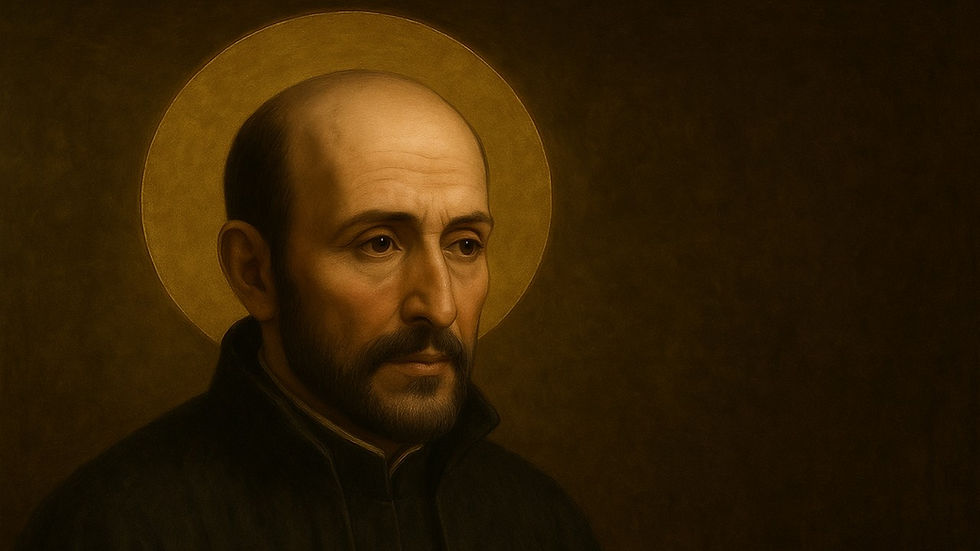
Saint Benedict of Nursia
We have explored monasticism in North Africa, Cappadocia, and the Middle East. But have you ever wondered about monastic spirituality in Europe and how it all began? The monastic movement made its way into Europe through the influence of the Desert Fathers, even before St. Benedict of Nursia (480–547) came along. However, Benedict gave shape and stability to European monasticism and is therefore often called the “father of Western monasticism.”
Benedict founded 12 monasteries in Italy, the most famous of which is the Monastery of Monte Cassino, located on a steep mountain halfway between Rome and Naples. Today, it is both a religious-cultural landmark and a tourist destination.
Born to well-to-do parents, Benedict was sent to Roman schools during a time when the imperial city was in decline. As a young man, he became horrified by the moral corruption of Rome and withdrew to the rural hills, later living for three years in a cave some 65 km east of Rome. There, he practiced an ascetic lifestyle as a hermit.[3] A monk named Romanus from a nearby monastery gave him a habit and occasionally brought him food.
Eventually, Benedict’s reputation as a holy man spread, and he was persuaded to become the abbot of a monastery after the previous abbot had died. However, not everyone appreciated his efforts to reform monasticism, which at the time was often disorganized and spiritually lax. Some monks in this monastery even attempted to poison him. According to tradition, Benedict was saved when the poisoned wine glass miraculously shattered before he could drink from it. This story—and many others—are recounted in the classic biography The Life of Saint Benedict by Pope Gregory the Great, written around 50 years after Benedict’s death.[4] Drawing on the recollections of monks who knew Benedict, Gregory records various miracles and provides insight into Benedict’s character. He describes him as wise, mature, and holy—authoritative yet fatherly, firm yet kind and loving. One might call Benedict a spiritual master. His personality is evident in The Rule of Saint Benedict, which he wrote and established in his communities. He also exercised spiritual gifts such as healing and prophecy “in a calm and unsensational manner.”[5] Benedict also had a twin sister, Scholastica, who became a hermit and later founded the Benedictine nuns.
In 1964, Pope Paul VI proclaimed St. Benedict the patron saint of all Europe. Pope Benedict XVI also named himself after him.
The Rule of Saint Benedict
As powerful and influential as it is, The Rule of Saint Benedict is surprisingly accessible—clear, simple, and reasonably uncomplicated. Dreher explains that the Rule offers “an approach to prayer, work, asceticism, stability, and community [that] requires practices that knit monastic community together tightly. The resulting closeness and cohesion are augmented by the monks’ separation from the world.” Yet, they are not to live for themselves alone but to serve others, even those outside the community.[6] In essence, the Rule is a training manual. If you come to it looking for esoteric or mystical teachings, says Dreher,[7] you’ve come to the wrong place. It’s a practical guide for organizing and leading a monastic community living together in chastity and poverty. Written primarily for laypeople, it “was for the ordinary and weak, to help them grow stronger in faith.”[8] While it may not be mystical literature, Joan Chittister argues that it is wisdom literature—teaching what our world most needs today. She writes: “Wisdom literature takes as its subject matter the meaning and manner of achieving the well-lived life. It deals with the spiritual, the ascetic, the Divine, and the nature of virtue. Its concerns lie in the meaning of holiness and the fundamentals of happiness.”[9]
The Rule became the normative guide for worship and monastic life throughout Europe.[10] Under Benedict’s practical guidance, monasticism began to shape “the European society of the Middle Ages and the formation of its culture.”[11] Chittister even suggests that Benedictine spirituality played a major role in rescuing Europe from the Dark Ages.[12]
Today, the Rule continues to guide monks, nuns, and laypeople alike. I read it once a year and use it as inspiration for my own personal Rule, which a Benedictine monk helped me craft. It provides “structure to the daily Christian life.”[13]
The daily rhythm of life in the Rule is structured around seven services, also known as the canonical hours: Lauds, Prime, Terce, Sext, None, Vespers, and Compline—each observed at set times in a chapel. The day also includes designated times for eating, reading, and study, especially lectio divina, or divine reading of Scripture, a practice that grew out of Benedictine spirituality. (We’ll explore lectio divina in more detail in the next blog.) This rhythm is balanced by manual labour. Though the phrase ora et labora, “pray and work,” does not appear in the Rule, it encapsulates the heart of Benedictine life and is widely associated with it.[14]
Dreher[15] explains, “In the Benedictine tradition, our labor is one way we participate in God's creative work of ordering creation and bringing forth good fruit from it.” Benedictine spirituality is marked by a variety of daily activities that form a healthy and balanced routine.[16] It is a spirituality of “moderation, balance, [and] control in everything.”[17] As Charles Ringma puts it: “This way of life represents a balance between prayer, reading, learning, practical daily work, the practice of hospitality, and the formation of those seeking this vocation.”[18]
Here are a few key principles that embody the Rule of Saint Benedict:
Discipline and Humility: Benedict believed that individuals living under a firm but loving Abbot would grow in humility and obedience.[19] The Abbot was to maintain discipline in a spirit of love, never acting harshly. Benedict writes, “When punishing he must act sensibly and not be excessive, in case he should damage the pot while trying to scrub away the dirt.”[20] The Abbot was also to assign labour according to the strength of each monk—never overburdening the weaker members.[21]
Humility: This is seen as a virtue of strong monks, enabling them to place others at the centre rather than themselves.[22]
Hospitality: The Benedictine Rule is strong on hospitality, understanding it as a sacramental practice of love, rooted in humility and reverence for Jesus Christ in others. It is not merely about receiving others, but about being open to God through the presence of every guest.
Correction: Reprimands for sinful behaviour were to be given privately at first, later publicly if needed. Penalties could include exclusion from meals, the sacraments, and common worship. Corporal punishment was sometimes used, particularly for boys sent to the monastery by their parents.[23] While such punishments, particularly corporal ones, may seem harsh today, they reflected the norms of the time. Benedict, however, insisted that no child was to be treated harshly. Adult monks, he said, should “mostly be corrected by means of a discreet rebuke.”[24]
Psalmody: All 150 Psalms were to be prayed weekly. While the Desert Fathers recited them daily, Benedict lightened the load. The Anglican Book of Common Prayer, influenced by Benedictine spirituality, takes the Church through the Psalter each month and reflects the Benedictine spirit in many ways.
Daily Living: Benedict writes, “Carry out God's commandments in what you do every day. Embrace chastity. Hate no one. Do not be jealous or give in to feelings of envy. Do not take pleasure in disputes. Avoid pride, respect your elders and care for those younger than yourself. Pray for your enemies in the love of Christ. Before the day's end be reconciled with anyone with whom you have a disagreement. Never despair of God's mercy. These, then, are the tools of the spiritual craft … The workshop where we work at all these tasks is the enclosure of the monastery, in the stability of the community.”[25]
The Saint Benedict Medal
So, what is the Saint Benedict Medal? It’s considered a sacramental in many Christian traditions—that is, a blessed object believed to offer spiritual benefits and prepare the soul to receive grace.
On the front, Benedict is depicted holding a cross and the Rule. Nearby are a poisoned cup and a raven. According to tradition, an evil priest tried to poison Benedict’s bread, but a raven carried it away. The cup was also poisoned, but when Benedict made the sign of the cross over it, the cup shattered.
On either side of Benedict are the initials C S P B representing the words Crux Sancti Patris Benedicti—“The Cross of Our Holy Father Benedict.” Around the edge of the front are the words Eius in obitu nostro praesentia muniamur—“May we be strengthened by his presence in the hour of our death.”
The back of the medal features the large initials C S P B, again for Crux Sancti Patris Benedicti, and a cross with C S S M L - N D S M D:
Crux sacra sit mihi lux. Non draco sit mihi dux. ("May the holy cross be my light! May the dragon never be my overlord!")
Around the perimeter are initials from an exorcism rite:Vade retro Satana! (Begone, Satan!) Nunquam suade mihi vana! (Never tempt me with your vanities!) Sunt mala quae libas. (What you offer me is evil.) Ipse venena bibas! (Drink the poison yourself.)
The medal concludes with the Latin word PAX, meaning “Peace.”

Lectio Divina
One of the great treasures of Benedictine spirituality is its approach to Scripture known as Lectio Divina. This method is not about academic study but about encountering God through the text. It involves reading a single passage slowly, multiple times—meditating on it, praying through it, and contemplating its meaning.[26] We’ll take a deeper look at this in the next blog.
Benedictine Spirituality for Today
According to Chittister, there are around 1,500 Benedictine and Cistercian[27] communities worldwide, with about 30,000 monks and nuns living under the Rule. Many clergy and laypeople (myself included) are also inspired by its principles as we seek to navigate a chaotic and challenging world.[28]
Despite its ancient roots, Benedictine spirituality is well-suited to the 21st century.[29] Dreher notes that “its teachings are plain enough to be adapted by lay Christians for their own use,” offering “a guide to serious and sustained Christian living in a fashion that reorders us interiorly, bringing together what is scattered within our own hearts and orienting it to prayer.”[30] Whether monk, nun, clergy, or layperson, Benedictine spirituality helps us all live integrated lives of prayer, study, and work—lives that are joyful, balanced, sustainable, and open to the work of the Holy Spirit.[31]
Task
I have included PDF copies of both The Rule of Saint Benedict and The Life of Saint Benedict by Gregory the Great. They are short but meaningful books. For this task, please review my personal Rule as an example, available here, and then—using the Rule of St. Benedict as a guide and inspiration—write your own Rule for daily living, devotion, and prayer. Try living by it for two or three months and see how it goes.
AI Disclaimer:
This article has been edited for grammar, clarity, and readability using AI-assisted tools. The core content, theological insights, and personal reflections remain my original work.
[1] Rod Dreher, The Benedict Option: A Strategy for Christians in a Post-Christian Nation (New York: Sentinel, 2017), 75.
[2] Dreher, xvii.
[3] Joan Chittister, The Rule of Benedict: A Spirituality for the 21st Century, 2nd ed. (New York: Crossroad, 2010), Loc. 277-286.
[4] Benedict of Nursia, The Rule of St Benedict, trans. Caroline White (London: Penguin Classics, 2008), ix; Chittister, The Rule of Benedict: A Spirituality, Loc. 277-287.
[5] Benedict of Nursia, The Rule of St Benedict, x.
[6] Dreher, The Benedict Option, 71–72.
[7] Dreher, 15.
[8] Dreher, 51.
[9] Chittister, The Rule of Benedict: A Spirituality, Loc. 227-233.
[10] Benedict of Nursia, The Rule of St Benedict, xxii.
[11] Benedict of Nursia, vii.
[12] Chittister, The Rule of Benedict: A Spirituality, Loc. 261-265.
[13] Benedict of Nursia, The Rule of St Benedict, vii.
[14] Benedict of Nursia, viii; Dreher, The Benedict Option, 60.
[15] Dreher, The Benedict Option, 178.
[16] Benedict of Nursia, The Rule of St Benedict, xxiv; Dreher, The Benedict Option, 74.
[17] Chittister, The Rule of Benedict: A Spirituality, Loc. 1034-1037.
[18] Charles R. Ringma, In the Midst of Much-Doing: Cultivating a Missional Spirituality (Carlisle: Langham Global Library, 2023), 316.
[19] Benedict of Nursia, The Rule of St Benedict, viii.
[20] Benedict of Nursia, 93.
[21] Benedict of Nursia, ix.
[22] Benedict of Nursia, ix.
[23] Benedict of Nursia, xii.
[24] Benedict of Nursia, xii.
[25] Benedict of Nursia, 18.
[26] Dreher, The Benedict Option, 59.
[27] The Cistercian Order is a reform movement within the Benedictine tradition.
[28] Chittister, The Rule of Benedict: A Spirituality, Loc. 288-291.
[29] Chittister, Loc. 241-261.
[30] Dreher, The Benedict Option, 53.
[31] Ringma, In the Midst of Much-Doing, 317.


Comments